|
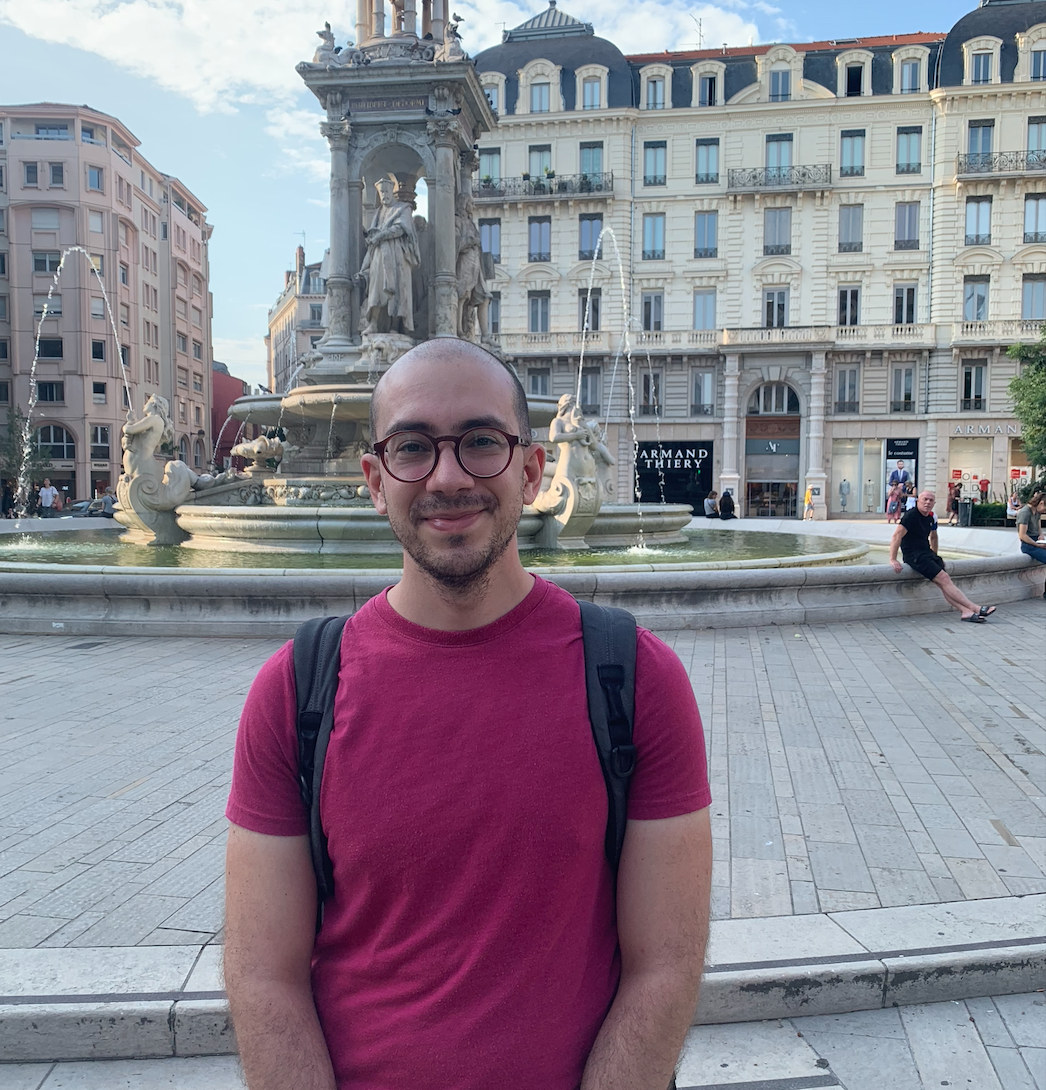
Justin Whitehouse
SAIL Postdoctoral Fellow, Stanford University
Email: jwhiteho (at) stanford (dot) edu
Google Scholar
I am on the 2026-2027 academic job market.
|
I am a Stanford Artificial Intelligence Laboratory (SAIL) postdoctoral fellow at Stanford University,
where I am fortunate to work with Vasilis Syrgkanis, Ramesh Johari, and
Emma Brunskill.
I am also affiliated with the Stanford Causal Science Center (SC2) and am an external researcher with Airbnb.
My research is broadly focused on problems in statistics, machine learning, and applied probability. Much of my work has been focused on causal inference, in particular the reliable estimation of (heterogeneous) treatment effects and optimal decision making. Here are some questions I have been thinking about:
- Data Fusion: How can a learner combine multiple imperfect data sources in order to identify and estimate a causal effect of interest?
- Assessing the Value of Personalization: When should a learner deploy a complex, potentially opaque treatment policy over a simpler, explainable one?
- Sequential Decision Making: How should a learner sequentially make decisions to maximize a reward, particularly in settings with a large number of treatments or rich heterogeneous treatment effects? Further, how should one adapt classical statistical machinery to be applicable on adaptively generated trajectories?
- Using and Improving Black-Box ML Predictions: How should a learner improve the quality of black-box ML predictors of heterogeneous treatment effects? How can a learner use synthetic predictions to augment causal estimators?
While my research is focused on developing statistical procedures that can be used in practice, the development of said estimators often involves interacting with rich statistical theory. Some examples of theoretical topics I am interested in include empirical process theory, self-normalized martingale concentration, non-regular statistical inference, and dimension-agnostic concentration.
Before starting as a postdoc at Stanford, I received my PhD in computer science from Carnegie Mellon University. There, I was advised by Aaditya Ramdas and Steven Wu, and was supported by the NSF Graduate Research Fellowship Program.
Prior to my PhD, I was an undergraduate at Columbia University in New York City, where I was an I.I. Rabi Scholar. There, I majored in mathematics and computer science.
Publications and Preprints
Journal Publications and Submissions
-
Inference on the Value of Policy Improvement in Adaptive Experiments
(with Emma Brunskill and Vasilis Syrgkanis).
Submitting to Operations Research, 2026.
-
Measuring Gift Card Program Incrementality via Causal Data Fusion
(with William Betz, Yan Zhang, Peter Coles, Ramesh Johari, and Vasilis Syrgkanis).
Submitting to Management Science, 2026.
-
Inference on Optimal Policy Values and Other Irregular Functionals via Softmax Smoothing
(with Morgane Austern and Vasilis Syrgkanis).
Submitted to Annals of Statistics, 2026.
-
Nonasymptotic Heavy-Tailed Mean Estimation in Smooth Banach Spaces
(with Ben Chugg, Diego Martinez Taboada, and Aaditya Ramdas).
Accepted, Stochastic Processes and Their Applications, 2026.
-
Time-Uniform Self-Normalized Concentration for Vector-Valued Processes
(with Aaditya Ramdas and Steven Wu).
Accepted, Annals of Applied Probability, 2025.
Conference Publications and Submissions
-
Policy Learning with Abstention
(with Ayush Sawarni, Jikai Jin, and Vasilis Syrgkanis).
AISTATS, 2026.
-
Doubly-Robust LLM-as-a-Judge: Externally Valid Estimation with Imperfect Personas
(with Luke Guerdan, Kimberly Truong, Steven Wu, and Ken Holstein).
ICLR, 2026.
-
Orthogonal Causal Calibration
(with Vasilis Syrgkanis, Christopher Jung, Bryan Wilder, and Steven Wu).
Extended Abstract @ Conference on Learning Theory (non-archival), 2025.
-
Multi-Armed Bandits with Network Interference
(with Abhineet Agarwal, Anish Agarwal, and Lorenzo Masoero).
Neurips, 2024.
-
On the Sublinear Regret of GP-UCB
(with Aaditya Ramdas and Steven Wu).
Neurips, 2023.
-
Adaptive Principal Component Regression with Applications to Panel Data
(with Anish Agarwal, Keegan Harris, and Steven Wu).
Neurips, 2023.
-
Fully-Adaptive Composition in Differential Privacy
(with Aaditya Ramdas, Steven Wu, and Ryan Rogers).
ICML, 2023.
-
Brownian Noise Reduction: Maximizing Privacy Subject to Accuracy Constraints
(with Aaditya Ramdas, Steven Wu, and Ryan Rogers).
Neurips, 2022.
-
The Case for Phase-Aware Scheduling of Parallelizable Jobs
(with Benjamin Berg, Benjamin Moseley, Mor Harchol-Balter, and Weina Wang).
39th International Symposium on Computer Performance, Modeling, Measurements and Evaluation, 2021.
-
Optimal Resource Allocation for Elastic and Inelastic Jobs
(with Benjamin Berg, Benjamin Moseley, Mor Harchol-Balter, and Weina Wang).
ACM Symposium on Parallelism in Algorithms and Architectures (SPAA 2020).
Preprints
Older Work
-
Bringing Engineering Rigor to Deep Learning
(with Kexin Pei, Shiqi Wang, Yuchi Tian, Carl Vondrick, Yinzhi Cao, Baishakhi Ray, Suman Jana, and Junfen Yang).
ACM SIGOPS Operating Systems Review, Volume 53 Issue 1 (SIGOPS 2019).
-
Efficient Formal Safety Analysis of Neural Networks
(with Shiqi Wang, Suman Jana, Kexin Pei, and Junfeng Yang).
Neurips, 2018.
-
Formal Security Analysis of Neural Networks Using Symbolic Intervals
(with Shiqi Wang, Suman Jana, Kexin Pei, and Junfeng Yang).
27th USENIX Security Symposium, 2018.
Teaching
I have served as a teaching assistant for the following classes.
- Graduate Algorithms (Spring 2022, CMU).
- Foundations of Privacy (Fall 2021, CMU).
- Computer Science Theory (Spring 2019, Columbia).
- Modern Algebra II (Spring 2019, Columbia).
- Complexity Theory (Fall 2018, Columbia).
- Introduction to Cryptography (Fall 2018, Columbia).
- Number Theory and Cryptography (Spring 2018, Columbia).